March 2, 2026
Athletic Performance Tracking in 2026: What Your Wearable Data Is Actually Telling You
Your wearable collects thousands of data points. Here's how to actually use them to train smarter, recover faster, and perform longer.
Athletic Performance Tracking in 2026: What Your Wearable Data Is Actually Telling You
Your watch buzzed this morning with a recovery score of 34. Yesterday it was 91. You slept roughly the same hours, ate roughly the same food, and yet apparently your body went from superhero to disaster zone overnight. So what do you do with that?
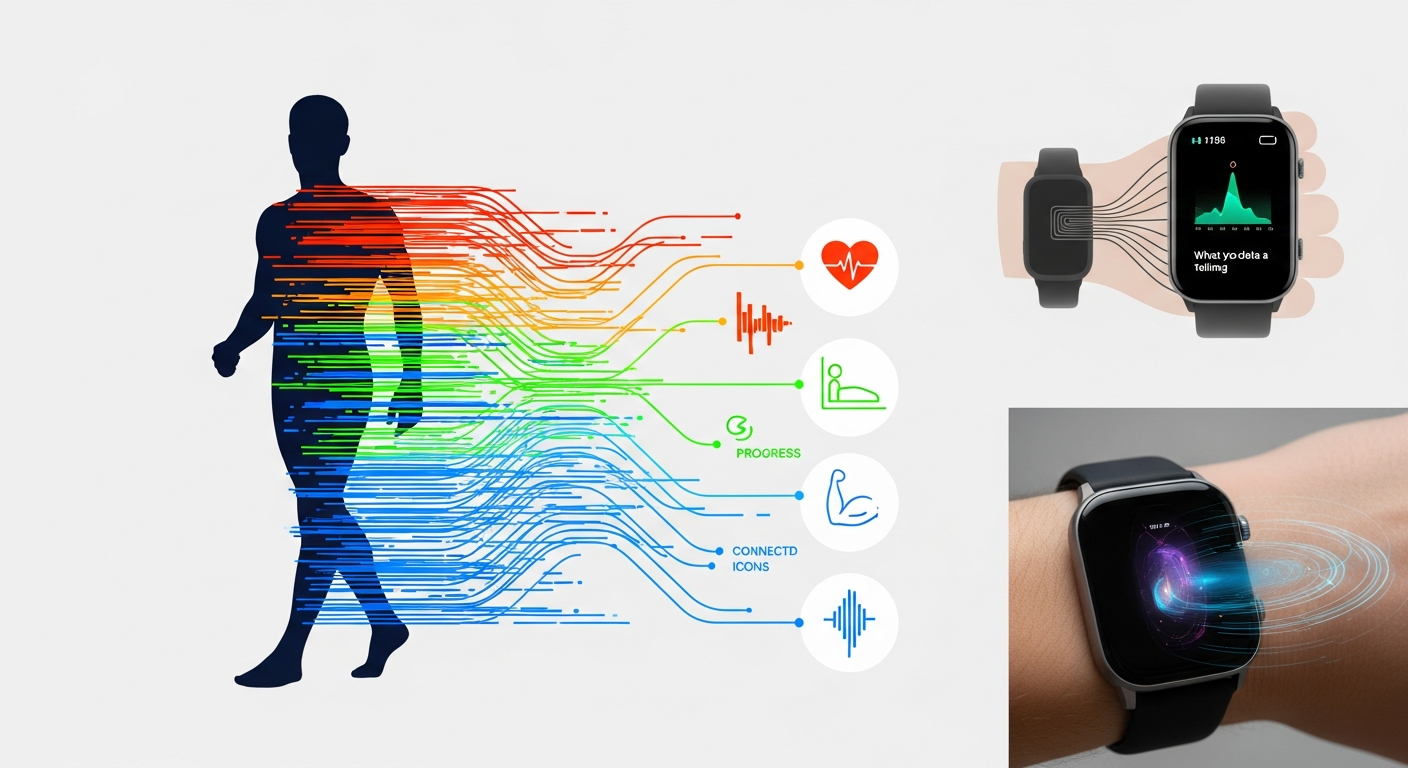
Most athletes stare at numbers like this and either ignore them completely or spiral into confusion. That's not a personal failing — it's a design problem. Wearables have gotten extraordinarily good at collecting data. The gap that still exists, and it's a wide one, is turning that data into something you can actually act on before you lace up your shoes.
This is what athletic performance tracking actually means in 2026. Not spreadsheets. Not obsessing over every metric. It's a simple chain: wearable signals → condition awareness → smart decision. Let's walk through how that works.
The Data Dump Problem
Here's a scenario that'll feel familiar. You finish a hard Tuesday interval session. Wednesday morning you open your app and you're greeted with: resting heart rate 58 bpm (up 6 from baseline), HRV 42ms (down 18%), sleep score 71, body battery 40%, VO2 max estimate unchanged at 52.
What does that mean for your Wednesday run? Should you go easy? Skip it? Push through anyway because you've got a race in six weeks?
The data is all there. The answer isn't.
This is what you might call the "data dump" problem. Most platforms — even the best ones — are still primarily in the business of reporting. They show you what happened. The translation layer, the part that says "given all of this, here's what your body probably needs today," is where most athletes are left to fend for themselves.
And that gap is costly. A 2023 study published in the International Journal of Sports Physiology and Performance found that athletes who trained with individualized readiness-adjusted loads improved performance markers 23% more than those following fixed periodization plans over a 12-week period. The data was available to both groups. The difference was interpretation.
What "Condition" Actually Means
Before you can use your tracking data well, you need a mental model for what it's actually measuring. Think of your athletic condition on any given day as sitting somewhere on a spectrum — from "primed and ready to push" at one end, to "your body is screaming for rest" at the other.
Several signals feed into where you sit on that spectrum:
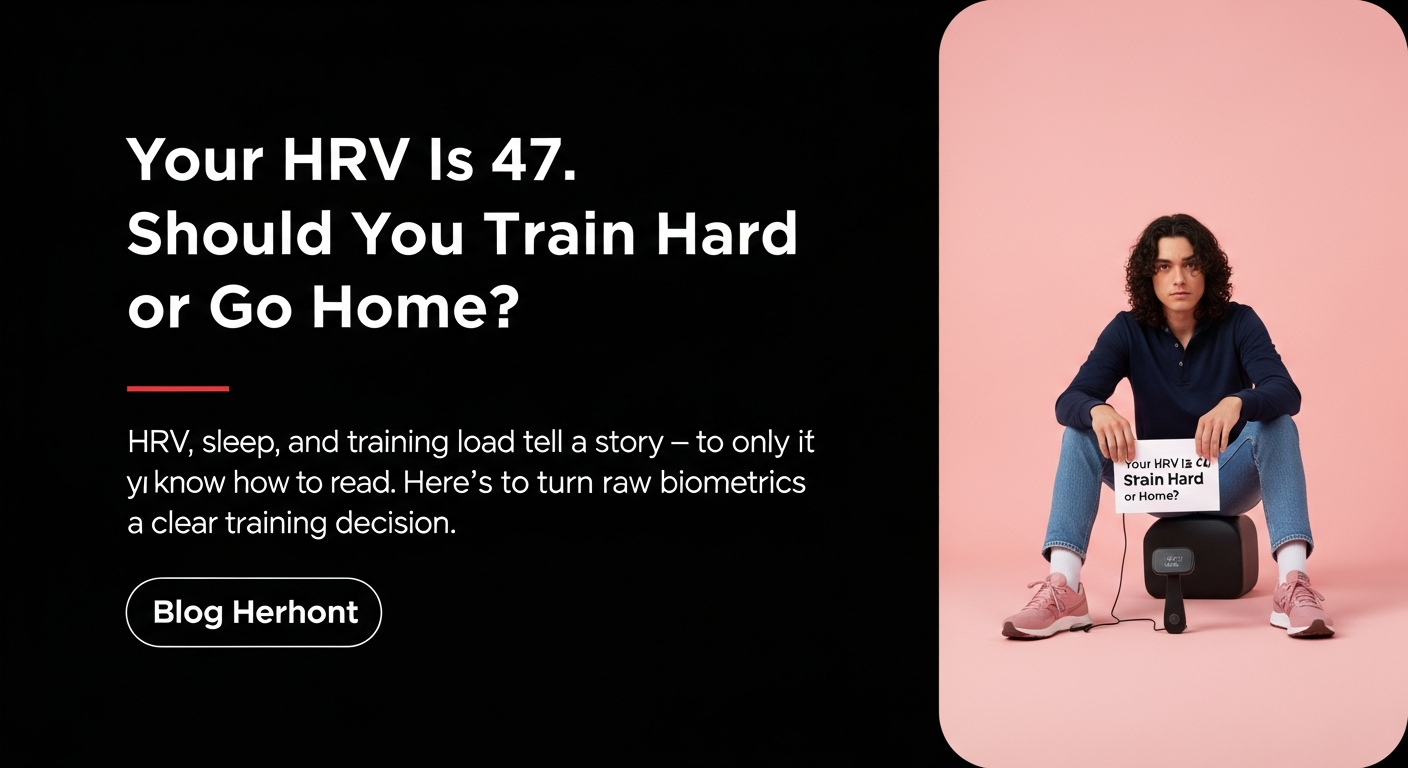
Heart Rate Variability (HRV) is probably the most reliable single marker of nervous system recovery. Higher variability generally means your parasympathetic system is in charge — you're recovered, adaptable, ready to handle stress. A suppressed HRV means the opposite. The key word here is trend. A single HRV reading means almost nothing. A 7-day rolling average dropping 15% below your personal baseline? That's a signal worth respecting.
Resting Heart Rate works similarly. An elevation of 5-7 bpm above your normal baseline — especially when combined with a low HRV — is often a reliable early warning sign of accumulated fatigue, oncoming illness, or inadequate recovery.
Sleep quality and duration aren't just about feeling rested. During deep sleep, your body releases the majority of its daily growth hormone, which drives muscle repair and adaptation. Consistently getting less than 7 hours doesn't just make you tired — it measurably slows recovery and impairs decision-making under physical stress.
Training load history — specifically the ratio between your acute workload (last 7 days) and your chronic workload (last 28 days) — tells you whether you're building fitness or accumulating risk. Sports scientists call this the Acute:Chronic Workload Ratio (ACWR). An ACWR above 1.5 is consistently associated with elevated injury risk across multiple sports. Below 0.8 and you're likely undertraining. The sweet spot sits between 0.8 and 1.3.
None of these metrics in isolation tells the full story. Together, they paint a picture of your condition — and your condition should be the first thing you check before deciding what today's session looks like.
The Three-Decision Framework
Once you've got a read on your condition, the actual training decision becomes much simpler. There are really only three options:
Push. Your signals are green. HRV is at or above baseline, resting HR is normal, sleep was solid, and your training load is in a healthy range. This is the day to chase the hard session, the tempo run, the heavy lifts. Don't waste a green day on a recovery jog.
Maintain. Something's slightly off — maybe one metric is dipping while others are fine, or you're coming off a heavy training block. This isn't a day to push new limits, but it's also not a rest day. A moderate, controlled effort keeps momentum without digging a deeper hole.
Reset. Multiple signals are red. This is the day you either rest completely, do genuine active recovery (think 20-minute walk, mobility work, maybe a swim at conversational pace), or address whatever's driving the suppression — sleep debt, stress, nutrition. Pushing through a genuine reset day doesn't make you tough. It delays your next good training week.
The hard part isn't understanding this framework — it's trusting it when your training plan says "8-mile tempo" and your body is clearly in reset territory. That tension is where most athletes make their worst decisions.
Where Athletes Go Wrong With Tracking Data
Chasing the number instead of the feeling. Wearable data is a proxy for physiological reality, not a perfect mirror of it. If your HRV says you're recovered but you feel genuinely awful, trust yourself. If your watch says you're depleted but you feel electric, it's okay to test the water with a moderate effort and see how it goes. The data informs the decision. It doesn't make it.
Ignoring context. A stressful week at work, a flight across time zones, a bad night caused by a noisy hotel — these things suppress your metrics just as much as a hard training block. A readiness score of 40 after a transatlantic flight means something completely different than a readiness score of 40 after three consecutive hard training days. Context is everything.
Optimizing too many variables at once. There's a real phenomenon happening right now where athletes are tracking sleep, HRV, nutrition, hydration, blood glucose, cortisol, and subjective mood — and spending more time analyzing data than actually training or recovering. More data isn't always better data. Pick two or three metrics you trust, build a baseline over 4-6 weeks, and make decisions from there.
Not building a personal baseline. This is the most common mistake. Population averages are nearly useless for individual training decisions. An HRV of 55ms might be excellent for one athlete and terrible for another. You need at least 4-6 weeks of consistent morning measurements — taken at the same time, same conditions, ideally before you get out of bed — before your numbers mean anything actionable.
The Longevity Angle Nobody Talks About Enough
Here's something that doesn't get nearly enough airtime: performance tracking isn't just about your next race. Done right, it's one of the most powerful tools you have for training into your 40s, 50s, and beyond without accumulating the kind of chronic damage that sidelines so many athletes.
The athletes who train for decades without major injury aren't just genetically lucky. They've learned to read their body's signals and respond to them. Wearable data is essentially a formalized version of that intuition — it gives you objective reference points to catch overreaching before it becomes injury, to spot illness before it becomes forced rest, to manage load across a season rather than just a week.
Think about it this way: if you can extend your high-performance training years by even 3-5 years by being smarter about recovery, that's worth more than any single PR.
Making It Practical This Week
You don't need to overhaul your entire approach. Start here:
Take your wearable's morning readiness or recovery score for the next 14 days and log it alongside one subjective note — just a word or two about how you actually feel. After two weeks, look for patterns. Do your subjective feelings track the data? Where do they diverge? That divergence is where your self-knowledge lives.
Then, before each session this week, ask yourself one question: given what my data and my body are telling me, am I pushing, maintaining, or resetting today? Make that call consciously instead of defaulting to whatever the training plan says regardless of context.
That single habit — checking in before defaulting — is what separates athletes who train smart from athletes who just train hard.
The data's already on your wrist. Now it's time to actually use it.